Gemas do Brasil: Tudo sobre pedras preciosas, garimpo (ouro, diamante, esmeralda, opala), feiras e cursos de Gemologia online Hotmart. Aprenda a ganhar dinheiro com gemas no país mais rico do mundo.
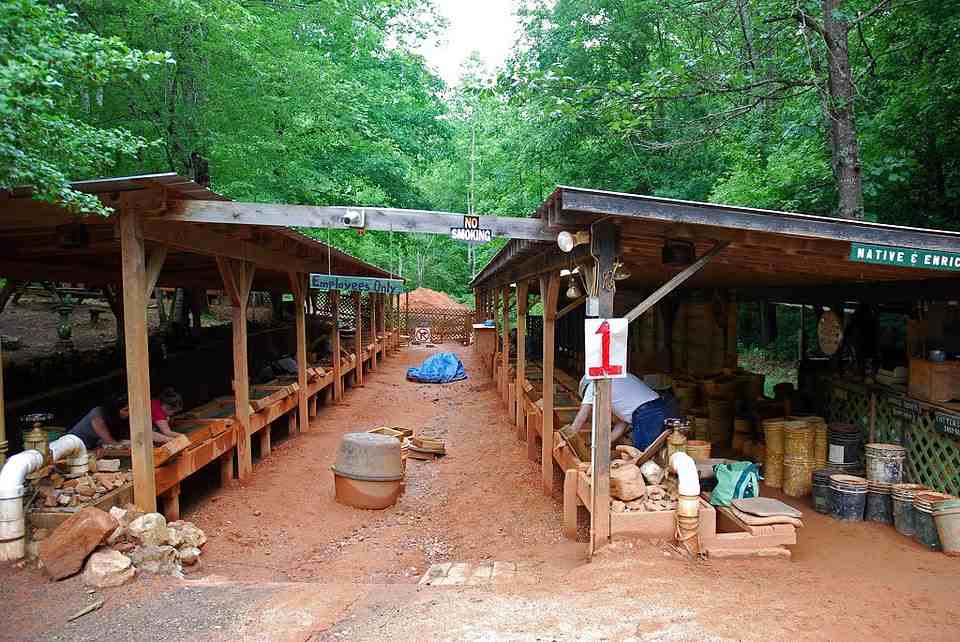
Find glittering, gorgeous emeralds in Hiddenite, only about an hour’s drive from Winston-Salem, NC. The Emerald Hollow Mine
is home to the only emerald mine in the United States open for public
treasure hunting. There are sluiceways where you can check out findings
from the mine, or you can pay to do your own prospecting, digging, and
hunting for a small fee.
Although the 70-acre site is known mostly for its emeralds, you could
also end up with sapphire, tourmaline, garnet, topaz, and aquamarine.
The mine is open year-round and boasts gorgeous scenery, too.
Gold resists attacks by individual acids, but it can be dissolved by
aqua regia (nitro-hydrochloric acid), so named because it dissolves gold
into a soluble gold tetrachloride cation. Gold compounds also dissolve
in alkaline solutions of cyanide, which have been used in mining. It
dissolves in mercury, forming amalgam alloys; it is insoluble in nitric
acid, which dissolves silver and base metals, a property that has long
been used to confirm the presence of gold in items, giving rise to the
term acid test.
Scientists make new discovery about bird evolution
Photograph of Eoconfuciusornis indet
In a new paper published in National Science Review, a team of
scientists from the Institute of Vertebrate Paleontology and
Paleoanthropology, the Shandong Tianyu Museum of Nature, and the Nanjing
Institute of Geology and Paleontology (all in China) described the most
exceptionally preserved fossil bird discovered to date.
The new specimen from the rich Early Cretaceous Jehol Biota
(approximately 131 to 120 million years old) is referred to as
Eoconfuciusornis, the oldest and most primitive member of the
Confuciusornithiformes, a group of early birds characterized by the
first occurrence of an avian beak. Its younger relative Confuciusornis
is known from thousands of specimens but this is only the second
specimen of Eoconfuciusornis found. This species comes only from the
130.7 Ma Huajiying Formation deposits in Hebei, which preserves the
second oldest known fossil birds. Birds from this layer are very rare.
This new specimen of Eoconfuciusornis, housed in the Shandong Tianyu
Museum of Nature, in Eastern China, is a female. The ovary reveals
developing yolks that vary in size, similar to living birds. This
suggests that confuciusornithiforms evolved a period of rapid yolk
deposition prior to egg-laying (crocodilians, which are archosaurs like
birds, deposit yolks slowly in all eggs for months with no period of
rapid yolk formation), which is indicative of complex energetic profiles
similar to those observed in birds.
This means Eoconfuciusornis and its kin, like living birds, was able
to cope with extremely high metabolic demands during early growth and
reproduction (whereas energetic demands in crocodiles are even, lacking
complexity). In contrast, other Cretaceous birds including the more
advanced group the Enantiornithes appear to have lower metabolic rates
and have required less energy similar to crocodilians and non-avian
dinosaurs (their developing yolks show little size disparity indicating
no strong peak in energy associated with reproduction, and much simpler
energetic profiles, limited by simpler physiologies).
Traces of skin indicate that the wing was supplemented by flaps of
skin called patagia. Living birds have numerous wing patagia that help
the bird to fly. This fossil helps show how bird wings evolved. The
propatagium (the flap of skin that connects the shoulder and wrist) and
postpatagium (the flap of skin that extends off the back of the hand and
ulna) evolved before the alular patagium (the flap of skin connecting
the first digit to the rest of the hand), which is absent in
Eoconfuciusornis. Even more unique is the preservation of the internal
structure of the propatagium which reveal a collagenous network
identical to that in living birds. This internal network gives the skin
flap its shape, allowing it to generate aerodynamic lift and aid the
bird in flight.
The nearly complete plumage preserves remnants of the original
plumage pattern, revealing the presence of spots on the wings and the
earliest documentation of sexual differences in plumage within birds.
This new specimen suggests that female Eoconfuciusornis were smaller
than males and lacked tail feathers, similar to many sexually dimorphic
living birds and the younger Confuciusornis in which the plumage of the
males and females are different from each other. Samples of the feathers
viewed under a microscope reveal differences in color characteristics,
allowing scientists to reconstruct the plumage. Female Eoconfuciusornis
had black spotted wings and gray body with a red throat patch.
Researchers have not found fossils from any other bird from the Jehol
period that reveal so many types of soft tissue (feathers, skin,
collagen, ovarian follicles). These remains allow researchers to create
the most accurate reconstruction of a primitive early bird (or dinosaur)
to date. This information provides better understanding of flight
function in the primitive confuciusornithiforms and of the evolution of
advanced flight features within birds.
“This new fossil is incredible,” said co-author Dr. Jingmai O’Connor.
“With the amount of information we can glean from this specimen we can
really bring this ancient species to life. We can understand how it
grew, flew, reproduced, and what it looked like. Fossils like this one
from the Jehol Biota continue to revolutionize our understanding of
early birds.”
A estrela anã branca Lucy – referência à canção “Lucy in the Sky with Diamonds”, dos Beatles – pode ser considerada o maior diamante do Universo. Descoberta em 2004, ela tem volume parecido ao da Terra e fica a 50 anos-luz daqui, na constelação de Centauro.
Uma anã branca é o que restou do núcleo quente de uma estrela após queimar todo o seu combustível – ainda demora uns 5 bilhões de anos, mas o Sol vai chegar lá. Cerca de 2 bilhões de anos após a morte do núcleo, composto basicamente de carbono, ele cristaliza e vira diamante.
Pulsações sonoras emitidas por esse tipo de estrela permitiram que os cientistas mapeassem o interior com tecnologia parecida com a dos sismógrafos usados para mapear as camadas geológicas da Terra.